Mar 20th 2026
Exhaust Wrap vs. Ceramic Coating: Which Controls Header Heat Better?
Under-hood heat is one of the biggest enemies of performance. Excessive heat from exhaust headers can raise intake temperatures, heat-soak fuel systems, damage wiring, and reduce overall efficiency. Builders typically turn to two popular solutions: ceramic coating or exhaust wrap. While both aim to reduce heat, they work in very different ways. When the goal is maximum heat control under the hood, exhaust wrap delivers several advantages that ceramic coating simply cannot match.
Headers routinely reach 1,000°F or more during normal operation. Without proper insulation, that radiant heat spreads throughout the engine bay, increasing temperatures around critical components like Fuel lines and rails, Wiring harnesses, Brake lines, Intake components, Sensors, electronics and more. The hotter the engine compartment becomes, the more performance and reliability suffer.
Exhaust Wrap: The Most Effective Heat Containment
Wrap Physically Insulates the Header
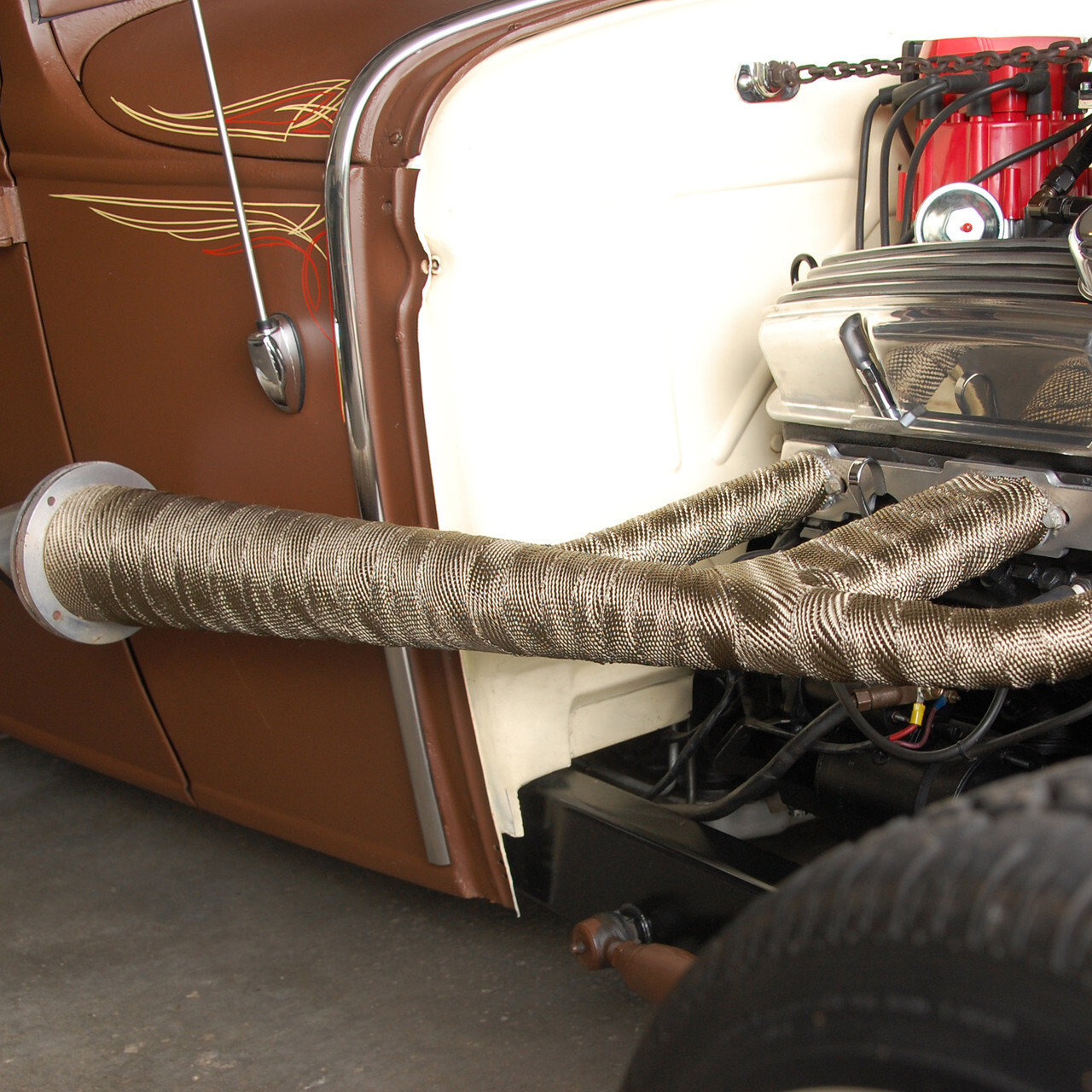
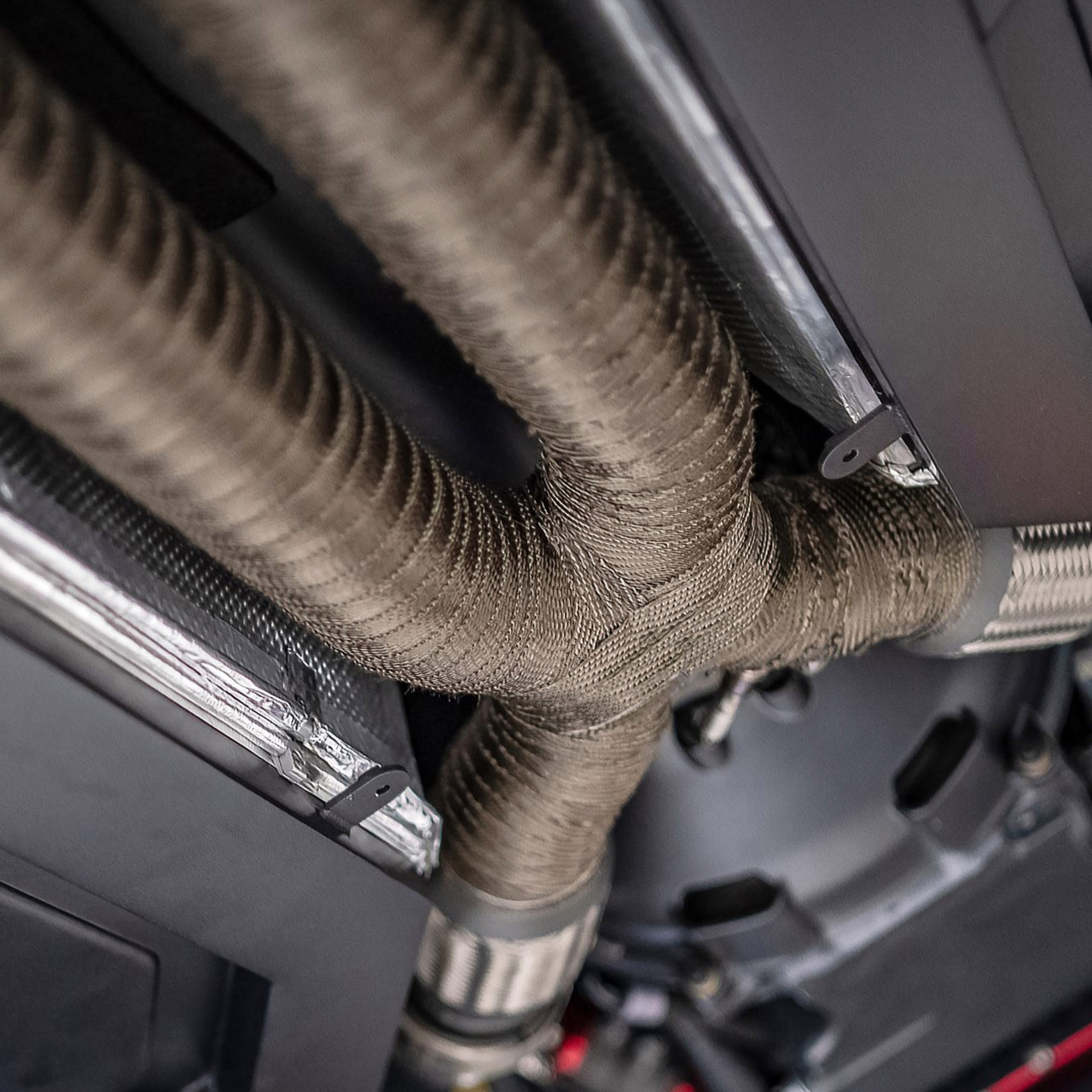
Ceramic coating is a surface treatment, while exhaust wrap is a thermal barrier. High-quality wraps like DEI Titanium Exhaust Wrap are constructed from advanced heat-resistant fibers that physically insulate the header tubing. By trapping heat inside the pipe, wrap dramatically reduces radiant heat escaping into the engine bay. The result… Lower under-hood temperatures, Reduced heat soak and Improved protection for nearby components
Because wrap creates a thicker insulating barrier, it generally blocks more radiant heat than ceramic coatings alone. As an example, would you rather bump your arm against a header with only ceramic coating on it… instantly melted skin! Or one with a physical heat barrier where at least you have a second to get out of the way before you get burned.
Keeping heat inside the exhaust system does more than protect components. Hotter exhaust gases move faster. By maintaining higher temperatures inside the header tubes, exhaust wrap helps maintain higher exhaust gas velocity, which can improve exhaust scavenging and overall engine efficiency. This is one reason wrap is widely used in racing and high-performance builds.
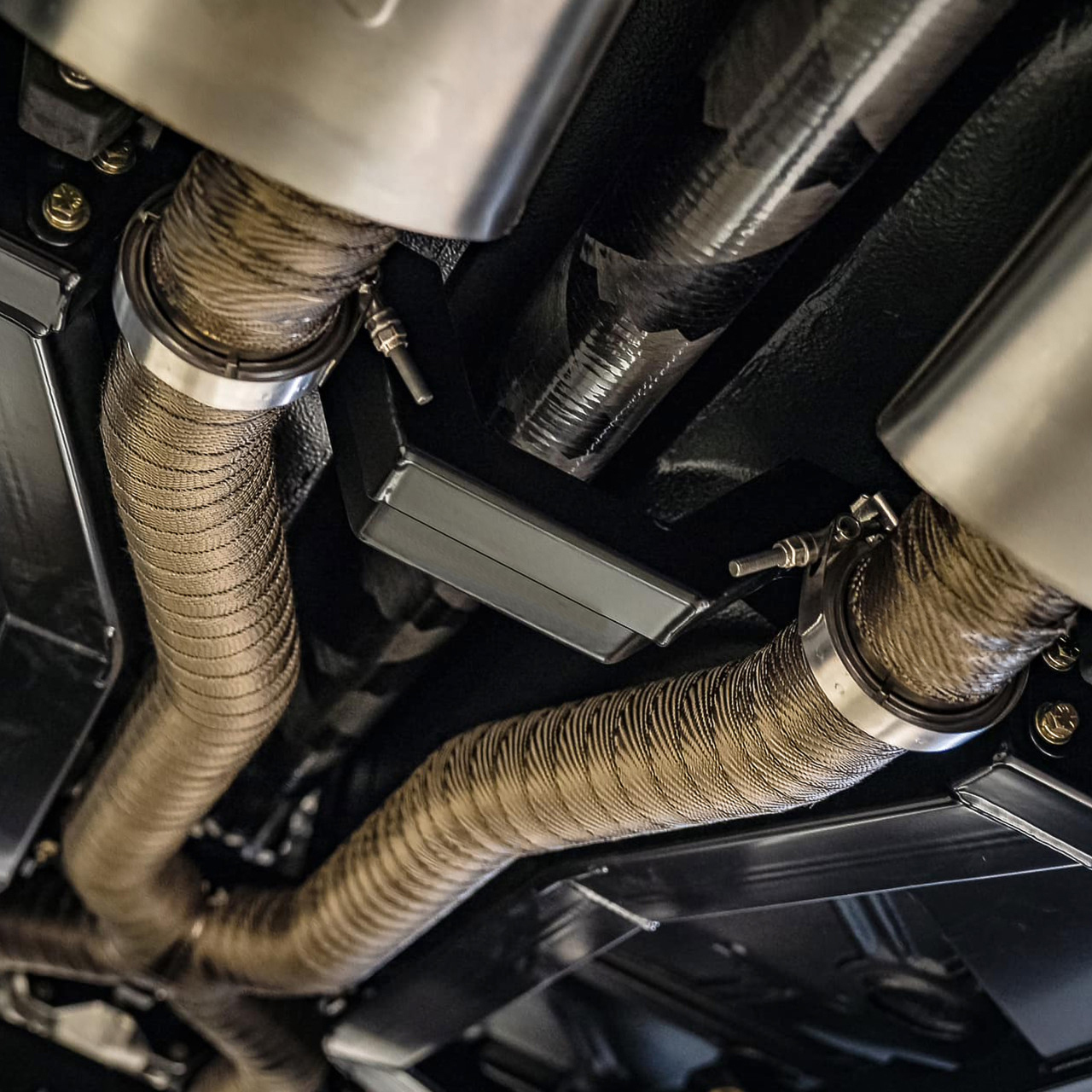
Additional benefit of exhaust wrap is a significantly lower cost. Ceramic coating requires Professional blasting and coating, often times having to send headers to a facility to have this done by a specialist. That is very time consuming and expensive. This process can easily cost several hundred dollars depending on the headers. Exhaust wrap, on the other hand, can be installed for a fraction of that cost, and at your own shop /garage. Most builders can wrap headers themselves using a few basic hand tools and common sense. The savings make wrap a budget-friendly heat control solution without sacrificing performance.
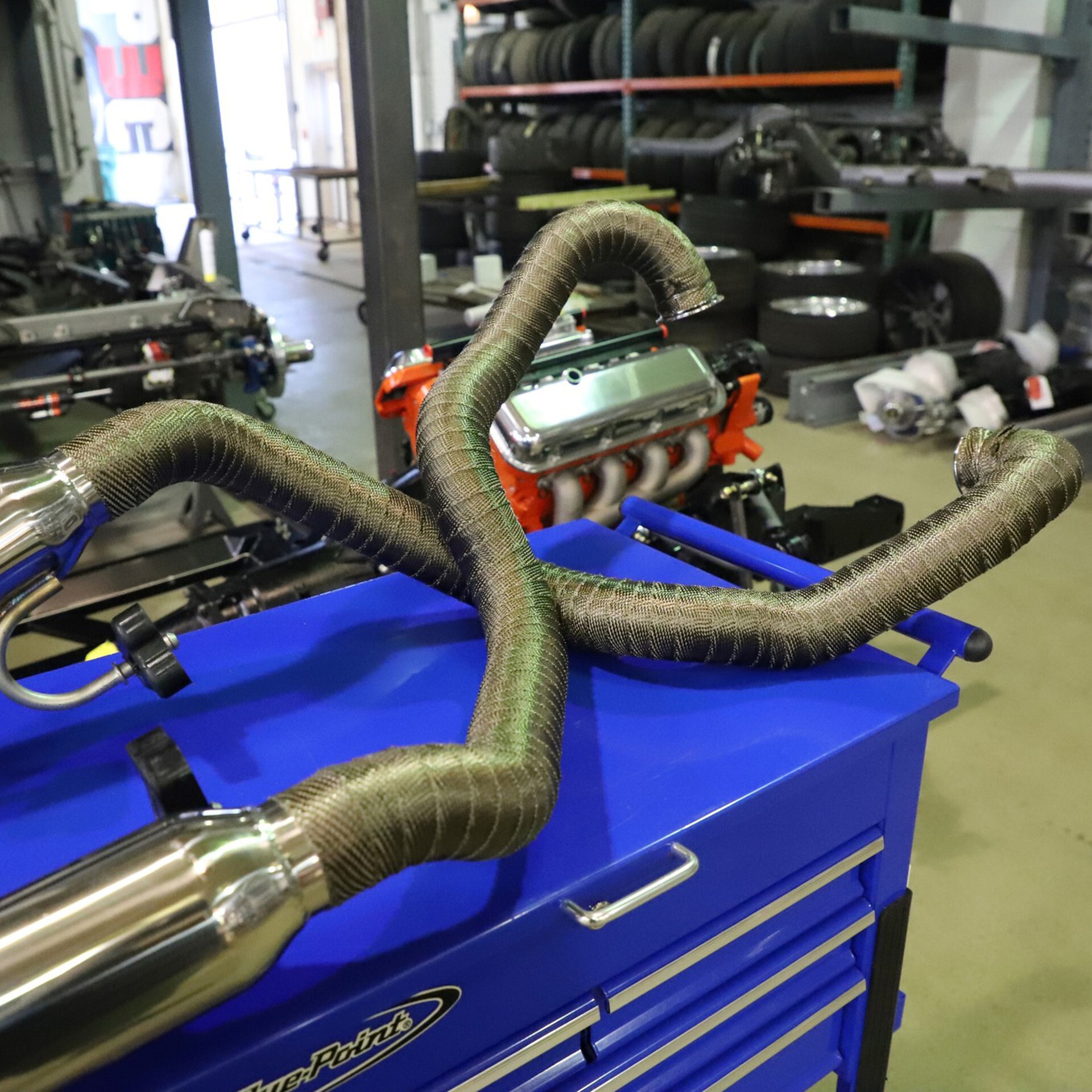
Why You Should NOT Use Exhaust Wrap and Ceramic Coating Together. Some people assume combining ceramic coating and exhaust wrap would create the ultimate heat control solution. In reality, this combination can create problems. When headers are both coated and wrapped, the amount of heat trapped inside the metal tubing increases significantly. Excessive heat retention can lead to Metal fatigue, Premature header failure, Cracking of thin-wall tubing and Reduced header lifespan. Headers are designed to dissipate some heat. Over-insulating them by combining both methods can push temperatures beyond what the metal was designed to handle. For this reason, most performance experts recommend choosing one method or the other — not both.
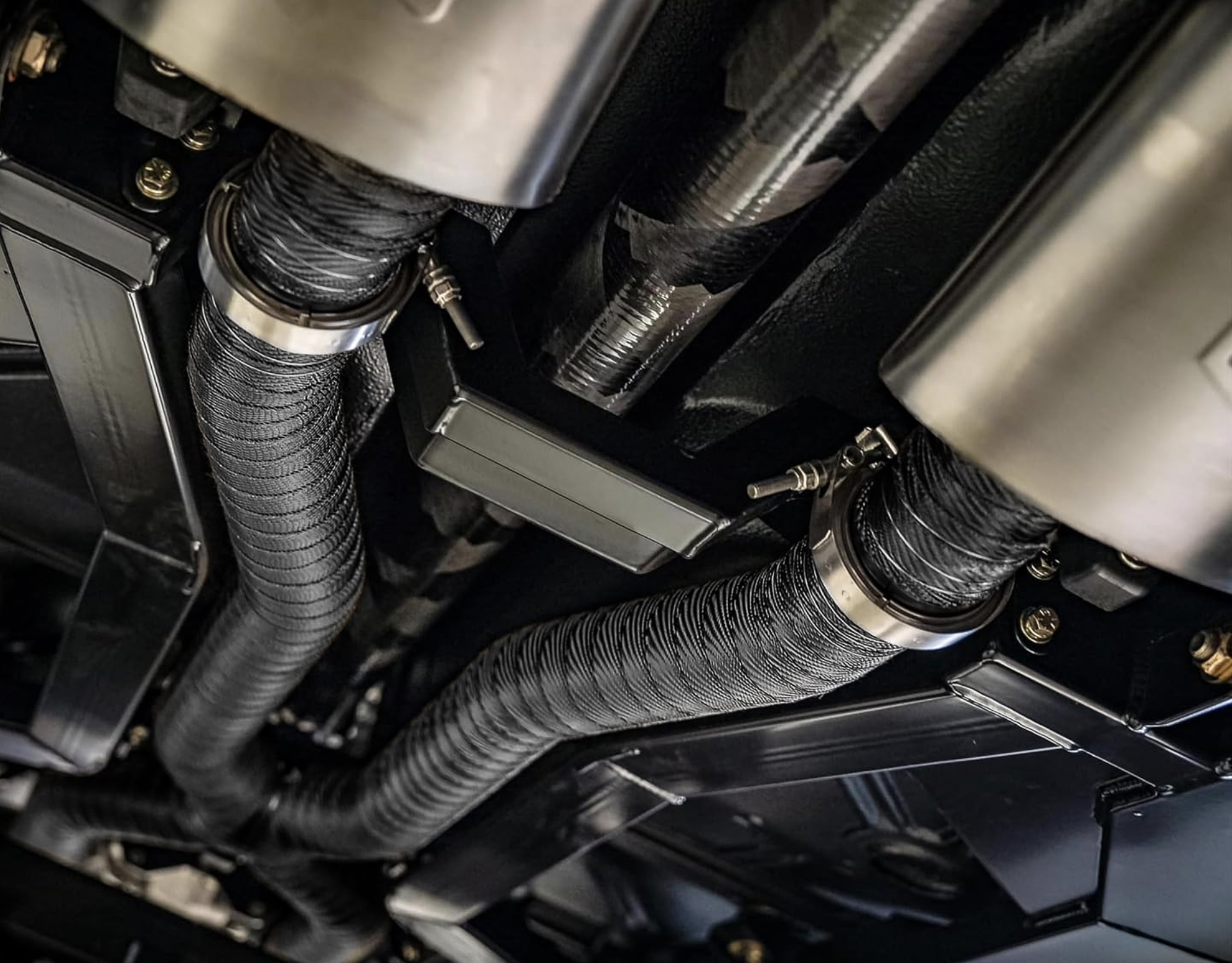
Exhaust Wrap Is The Smart Choice for Heat Control
For builders looking to maximize heat containment, reduce engine bay temperatures, and protect nearby components, exhaust wrap remains one of the most effective and practical solutions available. With its ability to Insulate headers more effectively, Improve exhaust efficiency, Reduce under-hood heat and Installs quickly and affordably.
DEI Exhaust Wrap continues to be the go-to solution for racers, fabricators, and performance enthusiasts who demand real thermal control.